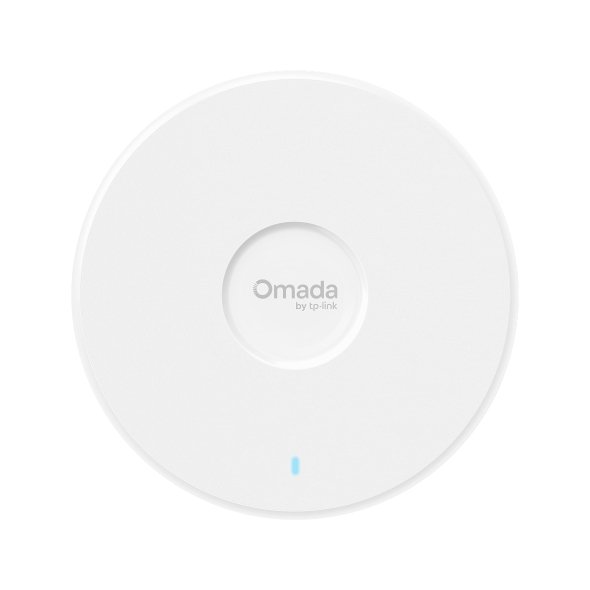
TP-Link EAP787 | BE15000 8-Stream Tri-Band Wi-Fi 7 Access Point is a high-performance enterprise wireless access point designed for demanding business, hospitality, education, retail, enterprise and high-density networking environments. Built around the latest Wi-Fi 7 standard, the EAP787 combines tri-band 8-stream wireless connectivity, a 10G multi-gigabit Ethernet interface, 320 MHz channel bandwidth, Multi-Link Operation (MLO), 4K-QAM, Multi-RUs, dedicated RF scanning and AFC support.
The India-market EAP787 delivers a combined theoretical wireless rate of up to 15.1 Gbps, consisting of 5765 Mbps on 6 GHz, 8648 Mbps on 5 GHz and 688 Mbps on 2.4 GHz. TP-Link classifies the access point as BE15000.
TP-Link EAP787 BE15000 Wi-Fi 7 Access Point
The EAP787 is designed for organizations that require very high wireless capacity, multi-gigabit wired connectivity and centralized network management. Its tri-band architecture provides dedicated 2.4 GHz, 5 GHz and 6 GHz wireless connectivity, while the 8-stream Wi-Fi 7 design enables higher aggregate capacity for modern client devices.
With support for the latest Wi-Fi 7 technologies, the EAP787 is suitable for high-density deployments where many users and devices simultaneously access bandwidth-intensive applications such as cloud services, video conferencing, large file transfers, high-resolution streaming and enterprise applications.
BE15000 Tri-Band Wi-Fi 7 Performance
The TP-Link EAP787 provides three wireless bands with the following theoretical signal rates:
| Wireless Band |
Maximum Signal Rate |
| 2.4 GHz |
688 Mbps |
| 5 GHz |
8648 Mbps |
| 6 GHz |
5765 Mbps |
| Total |
15,101 Mbps / approximately 15.1 Gbps |
These are theoretical physical-layer signal rates. Actual throughput depends on client capability, channel conditions, interference, network configuration, environmental factors and other deployment conditions.
Wi-Fi 7 with 320 MHz Channel Bandwidth
The EAP787 supports Wi-Fi 7 (IEEE 802.11be) and advanced technologies designed to increase wireless capacity and efficiency. The 6 GHz band supports up to 320 MHz channel bandwidth, allowing compatible Wi-Fi 7 clients to use much wider channels for higher theoretical throughput.
- Wi-Fi 7 / IEEE 802.11be
- 320 MHz channel bandwidth
- Multi-Link Operation (MLO)
- 4K-QAM
- Multi-RUs
- OFDMA
- MU-MIMO
- BSS Coloring
- Beamforming
- Band Steering
- Airtime Fairness
- Load Balancing
10G Multi-Gigabit Ethernet with PoE++
To prevent the wired network from becoming a bottleneck for high-speed Wi-Fi, the EAP787 features a 10/5/2.5/1GbE Ethernet port. This multi-gigabit interface supports connection speeds up to 10 Gbps and provides the wired bandwidth required for high-performance Wi-Fi deployments.
The Ethernet interface also supports 802.3bt PoE++, allowing data and power to be delivered over a single Ethernet cable. This simplifies installation in ceiling-mounted environments where running a separate electrical connection may be inconvenient.
| Wired Connectivity |
Specification |
| Ethernet Port |
1 × 10/5/2.5/1GbE |
| Maximum Ethernet Speed |
10 Gbps |
| PoE |
802.3bt PoE++ |
| Power Adapter |
Not included |
Dedicated RF Scanning
One of the major features of the EAP787 is its dedicated RF scanning radio. Instead of relying exclusively on the radios responsible for serving wireless clients, dedicated RF scanning allows the access point to perform spectrum analysis and monitor the wireless environment.
TP-Link specifies real-time tri-band spectral analysis, over-the-air packet capture, continuous scanning without disrupting normal data transmission and interference-source identification. Dedicated RF scanning requires an Omada Controller V6.0 or above.
- Real-time spectrum monitoring
- Tri-band RF analysis
- Interference detection
- Interference source identification
- Over-the-air packet capture
- Continuous RF scanning
- Wireless environment analysis
AFC Support for the 6 GHz Band
The EAP787 is designed to take advantage of the 6 GHz spectrum and supports Automated Frequency Coordination (AFC) where applicable. AFC can help optimize 6 GHz operation and improve usable coverage and performance in supported regions.
Availability and operation of AFC depend on local regulatory requirements and supported country/region configurations.
High-Density Wireless Connectivity
The EAP787 is designed for environments where a large number of wireless clients may be connected simultaneously. TP-Link specifies support for 510+ concurrent clients under its stated conditions.
The access point supports up to 24 SSIDs, with up to 8 SSIDs available per wireless band. This allows network administrators to create separate wireless networks for employees, guests, IoT devices, visitors and other user groups.
Omada Mesh and Seamless Roaming
The EAP787 integrates with the TP-Link Omada ecosystem and supports advanced wireless deployment features such as Omada Mesh and Seamless Roaming.
Seamless Roaming can help compatible clients transition between Omada access points as users move through a building. Omada Mesh can provide flexible wireless deployment where a wired Ethernet connection is not available at every access-point location.
These features are particularly useful in offices, hotels, educational campuses, retail environments and other multi-access-point deployments.
Centralized Omada Management
The EAP787 can be centrally managed through the TP-Link Omada Software Defined Networking platform. Omada brings access points, switches and gateways together under centralized management, making it possible to configure and monitor a complete business network from a unified management interface.
Depending on the deployment, administrators can use Omada Cloud-Based Controller, Omada Hardware Controller or Omada Software Controller.
- Centralized cloud management
- Omada Cloud-Based Controller
- Omada Hardware Controller
- Omada Software Controller
- Omada App management
- Multi-site management
- Device monitoring
- Firmware management
- Wireless configuration
- Network-wide configuration
Wireless Security
The EAP787 provides multiple enterprise wireless security and network-control features for managed deployments.
- WPA-Personal
- WPA-Enterprise
- WPA2-Personal
- WPA2-Enterprise
- WPA3-Personal
- WPA3-Enterprise
- Captive Portal Authentication
- Access Control
- MAC Filtering
- Wireless Client Isolation
- VLAN
- Rogue AP Detection
- RADIUS Authentication
- MAC Authentication
Advanced Wireless Features
The EAP787 includes a comprehensive set of wireless management and optimization features intended for professional network deployments.
| Feature |
Purpose |
| Multi-Link Operation |
Improves performance and latency with compatible Wi-Fi 7 clients |
| 4K-QAM |
Higher modulation efficiency with compatible devices |
| Multi-RUs |
More efficient wireless resource allocation |
| OFDMA |
Efficient multi-client communication |
| MU-MIMO |
Simultaneous communication with multiple compatible clients |
| Beamforming |
Improves signal direction toward clients |
| Band Steering |
Helps distribute clients across available bands |
| Load Balancing |
Helps distribute wireless clients across access points |
| Airtime Fairness |
Improves airtime utilization between clients |
| BSS Coloring |
Helps reduce interference from overlapping wireless networks |
Ceiling-Mount Design
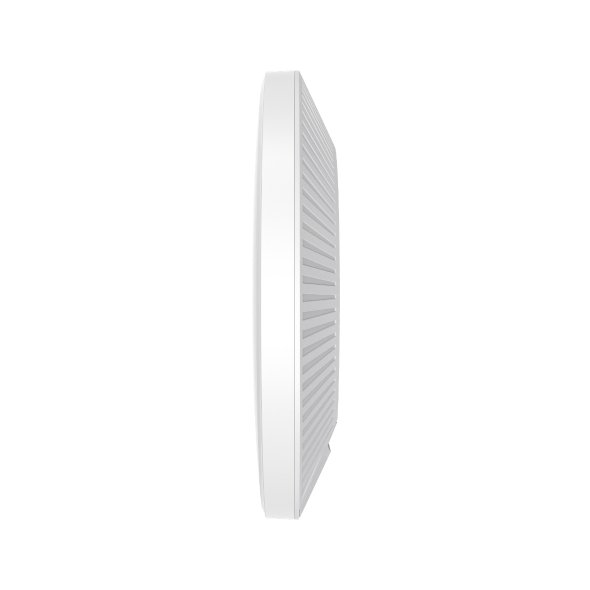
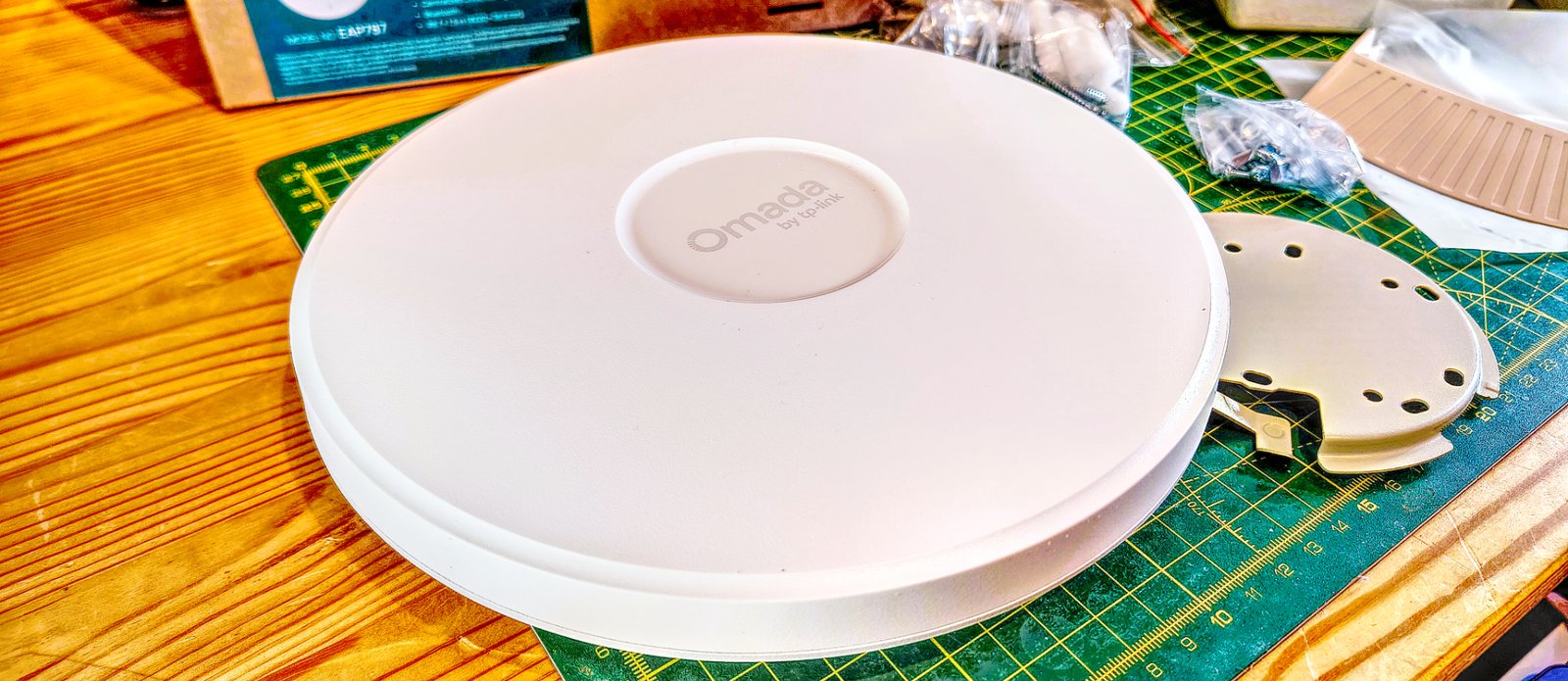
The TP-Link EAP787 is designed as a ceiling-mount access point for professional indoor wireless deployments. Its form factor is suitable for centrally positioning the access point within offices, classrooms, meeting areas, hotels, retail stores and other commercial spaces.
The package includes the EAP787, installation guide and ceiling/wall/junction-box mounting kit. TP-Link specifies that the power adapter is not included.
Recommended Applications
The high wireless capacity and 10G Ethernet connectivity of the EAP787 make it suitable for demanding network environments.
- Enterprise Wi-Fi networks
- Corporate offices
- High-density offices
- Hotels and hospitality
- Educational institutions
- Universities and campuses
- Retail stores
- Conference and meeting spaces
- Large commercial buildings
- High-performance wireless networks
- Multi-access-point Omada deployments
TP-Link EAP787 Specifications
| Specification |
Details |
| Model |
TP-Link EAP787 |
| Product Type |
Ceiling Mount Tri-Band Wi-Fi 7 Access Point |
| Wi-Fi Class |
BE15000 |
| Wireless Standard |
IEEE 802.11 a/b/g/n/ac/ax/be |
| Wireless Bands |
2.4 GHz + 5 GHz + 6 GHz |
| 2.4 GHz Speed |
688 Mbps |
| 5 GHz Speed |
8648 Mbps |
| 6 GHz Speed |
5765 Mbps |
| Aggregate Theoretical Speed |
Up to 15.1 Gbps |
| Spatial Streams |
8-Stream |
| Channel Bandwidth |
Up to 320 MHz |
| Ethernet |
1 × 10/5/2.5/1GbE |
| PoE |
802.3bt PoE++ |
| Concurrent Clients |
510+ |
| SSIDs |
Up to 24 |
| Wi-Fi 7 Technologies |
320 MHz, MLO, 4K-QAM, Multi-RUs |
| Advanced Wireless |
MU-MIMO, OFDMA, BSS Coloring, Beamforming, Load Balancing |
| RF Scanning |
Dedicated RF Scanning Radio |
| AFC |
Supported where applicable |
| Mesh |
Omada Mesh |
| Roaming |
Seamless Roaming |
| Management |
Omada Cloud / Hardware / Software Controller |
| Wireless Security |
WPA/WPA2/WPA3, Captive Portal, VLAN, Access Control |
| Mounting |
Ceiling / Wall / Junction Box Mounting Kit |
Frequently Asked Questions
What is the Wi-Fi speed of TP-Link EAP787?
The India-market EAP787 supports up to 688 Mbps on 2.4 GHz, 8648 Mbps on 5 GHz and 5765 Mbps on 6 GHz, for an aggregate theoretical wireless rate of approximately 15.1 Gbps.
Is TP-Link EAP787 a Wi-Fi 7 access point?
Yes. The EAP787 is an 8-stream tri-band Wi-Fi 7 access point supporting IEEE 802.11be.
Does EAP787 have a 10G port?
Yes. The EAP787 has one multi-gigabit Ethernet port supporting 10G, 5G, 2.5G and 1G Ethernet connectivity.
Does EAP787 support PoE++?
Yes. The EAP787 supports 802.3bt PoE++ for power and network connectivity through the Ethernet cable.
Does EAP787 support 6 GHz Wi-Fi?
Yes. The EAP787 is a tri-band access point supporting 2.4 GHz, 5 GHz and 6 GHz wireless bands.
Does EAP787 support 320 MHz Wi-Fi 7?
Yes. The EAP787 supports up to 320 MHz channel bandwidth, with 320 MHz operation available on the 6 GHz band subject to regulatory and client limitations.
What is Dedicated RF Scanning in EAP787?
Dedicated RF Scanning provides a separate radio for continuous spectrum monitoring, interference analysis and related wireless troubleshooting functions without disrupting normal client data transmission. TP-Link states that this feature requires an Omada Controller V6.0 or above.
Does EAP787 support Omada Mesh?
Yes. EAP787 supports Omada Mesh and Seamless Roaming when used with the appropriate Omada Controller environment.
Is the power adapter included with EAP787?
No. TP-Link specifies that the power adapter is not included. The access point can be powered using compatible PoE++ infrastructure.

 Fast Air Cargo delivery