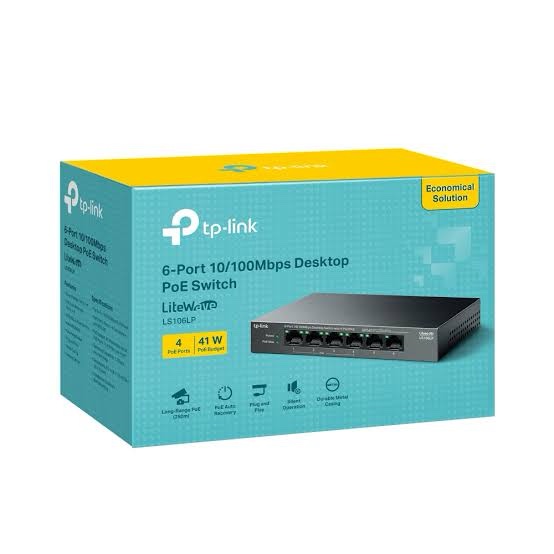
TP-Link LS106LP 6-Port 10/100Mbps PoE+ Switch
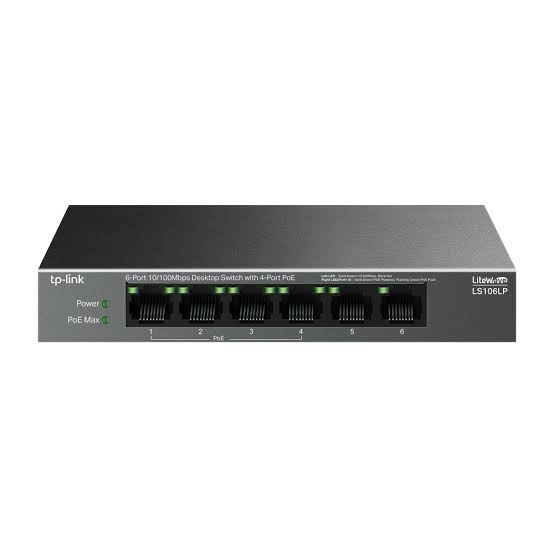
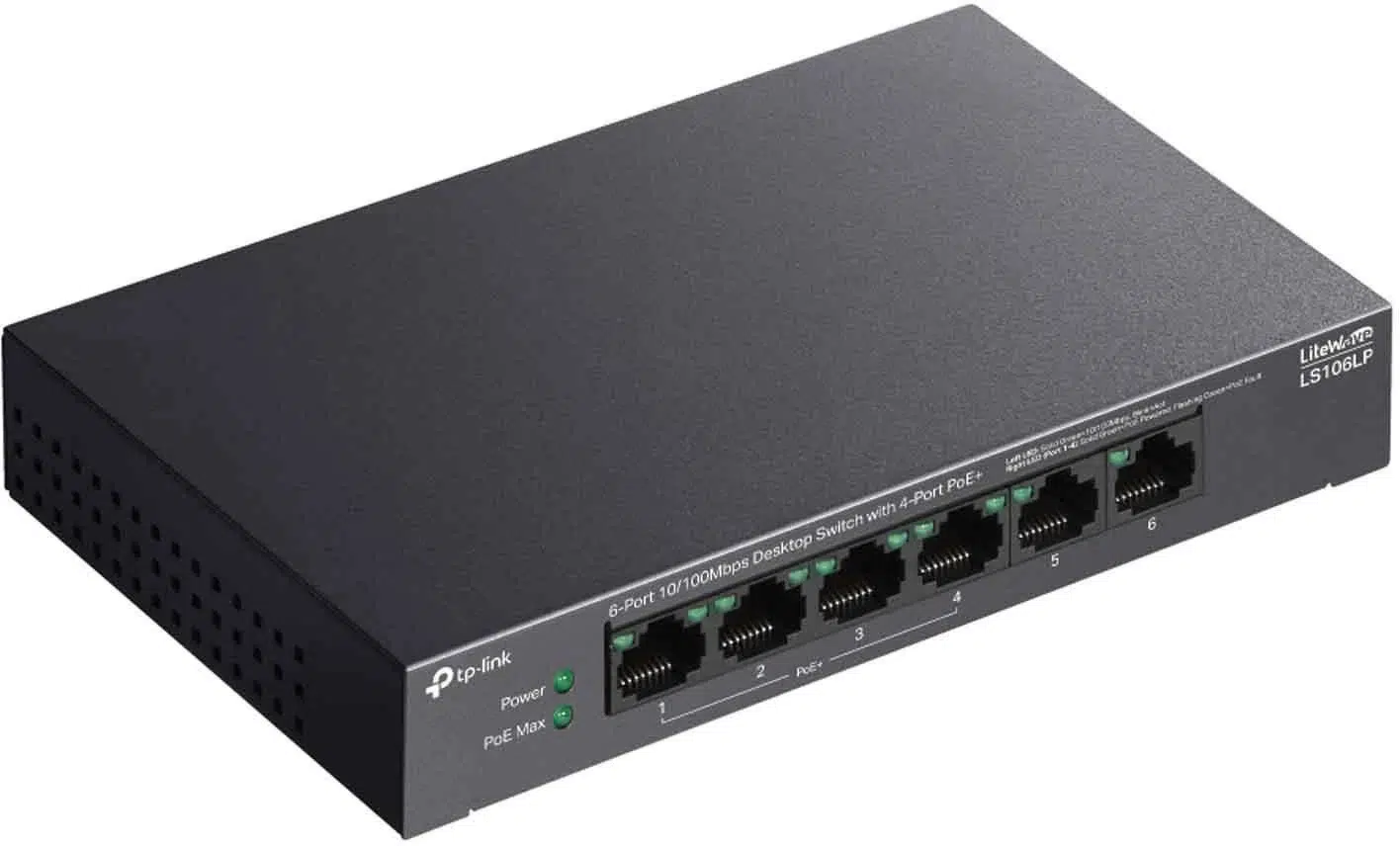
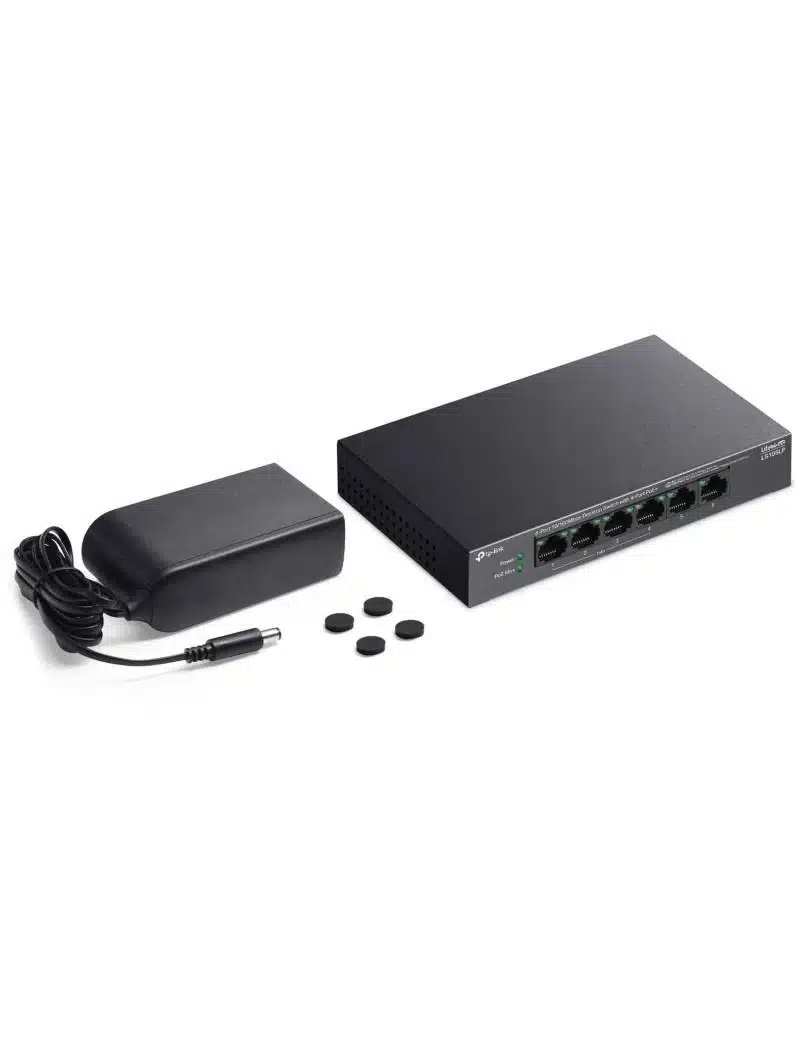
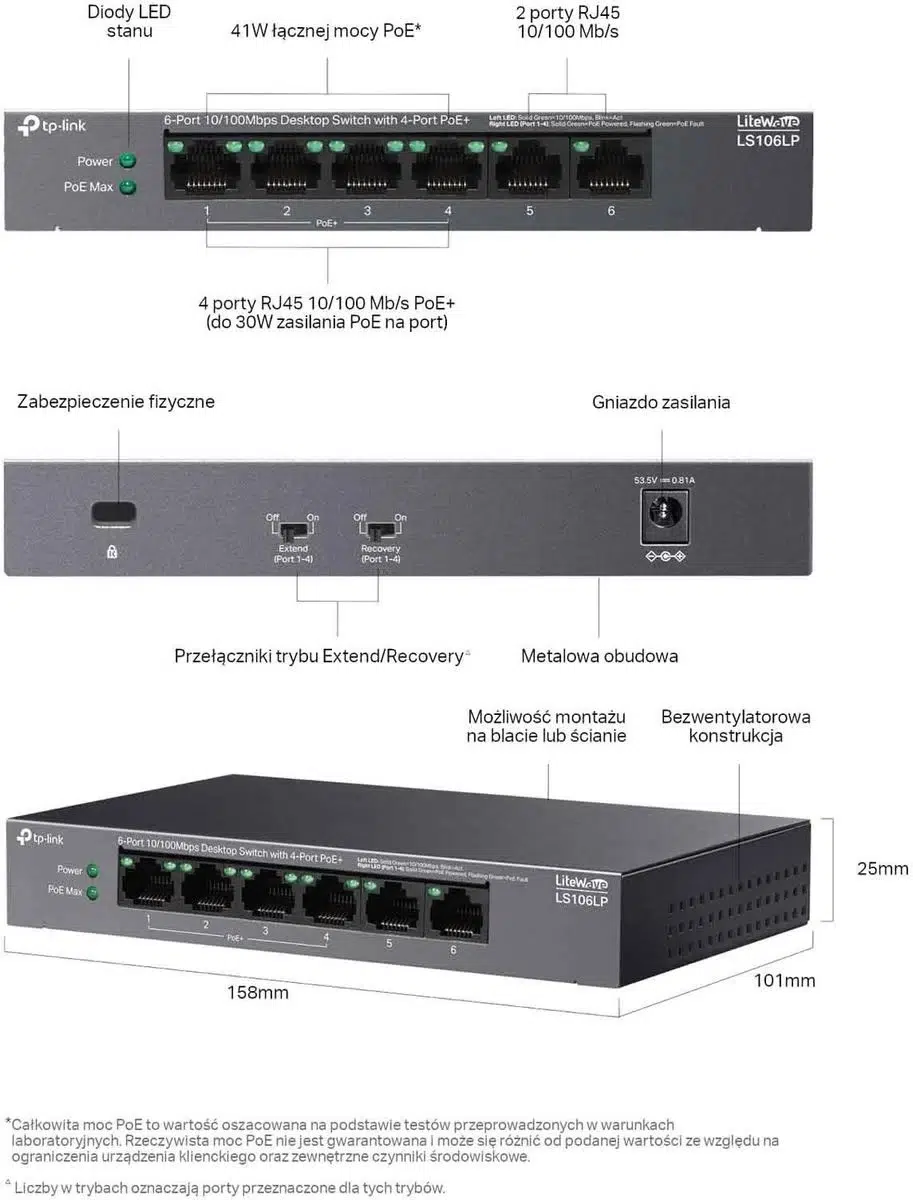
The TP-Link LS106LP is a compact 6-port unmanaged PoE+ switch designed for IP surveillance, small office networks, wireless access points, IP phones and other installations that require Power over Ethernet. It provides 4× 10/100Mbps PoE+ ports and 2× 10/100Mbps non-PoE ports, with a total PoE power budget of up to 65W.
The LS106LP supports IEEE 802.3af/at PoE+ and can deliver up to 30W per PoE port under supported conditions. It also provides Extend Mode, Isolation Mode and PoE Auto Recovery. Extend Mode can transmit data and PoE power over distances of up to 250 metres on compatible ports, with the Ethernet speed reduced to 10Mbps in this mode. ([tp-link.com](https://www.tp-link.com/in/business-networking/soho-switch-unmanaged/ls106lp/?utm_source=chatgpt.com))
Key Features of TP-Link LS106LP
- 6× 10/100Mbps RJ45 Ports: Four PoE+ ports and two non-PoE ports.
- 4× PoE+ Ports: Ports 1–4 support IEEE 802.3af/at PoE+.
- 65W PoE Budget: Provides up to 65W total PoE power for connected devices.
- 30W Per PoE Port: Up to 30W per PoE port under supported conditions.
- 250m Extend Mode: Supports long-distance PoE and data transmission on Ports 1–4.
- Isolation Mode: Helps isolate PoE ports from each other for improved network security.
- PoE Auto Recovery: Automatically detects and recovers compatible unresponsive PoE-powered devices.
- Plug and Play: No software configuration is required.
- Fanless Design: Silent operation with no mechanical cooling fan.
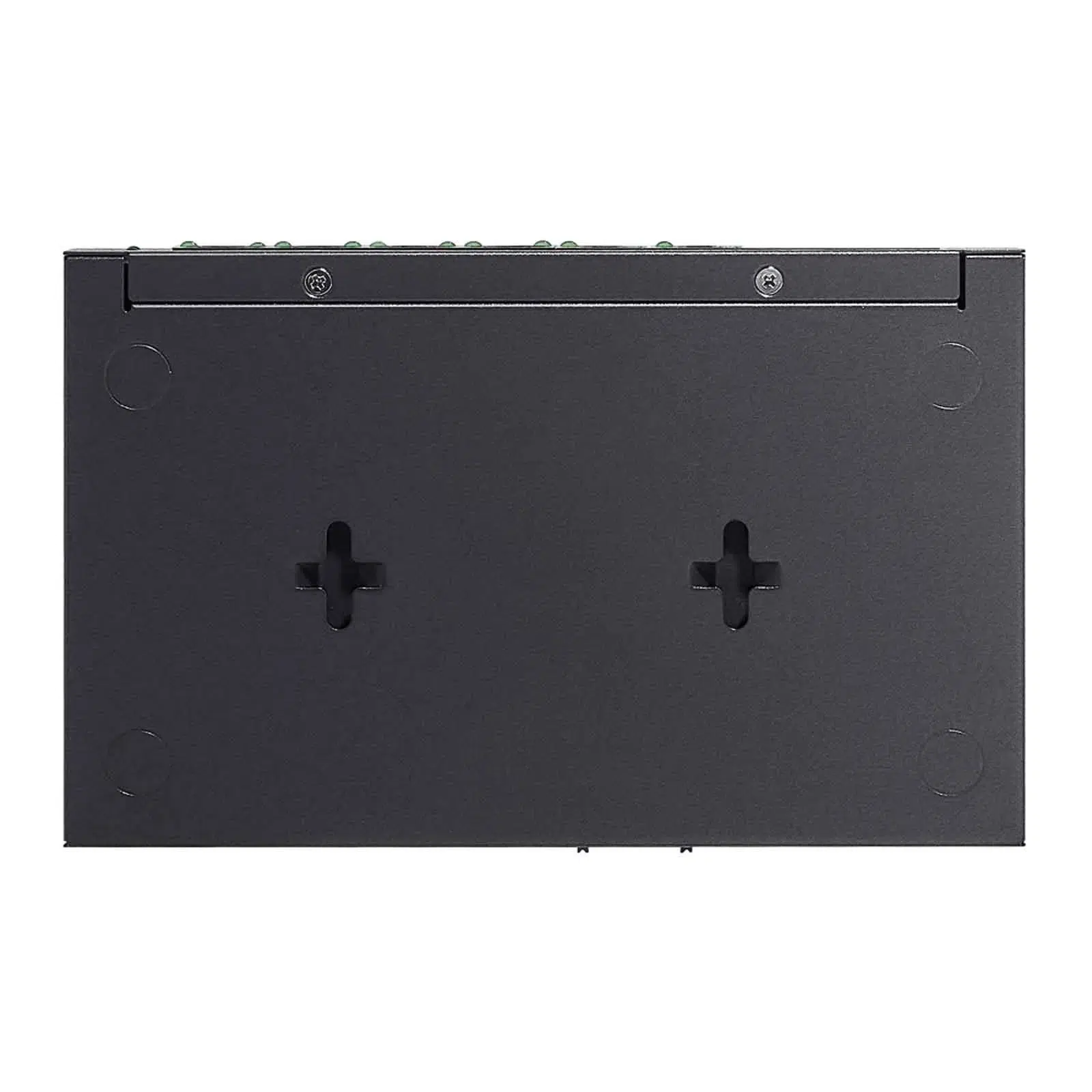
- Compact Design: Suitable for desktop and wall-mounted installations.
4-Port PoE+ Connectivity
The LS106LP provides four 10/100Mbps PoE+ ports on Ports 1–4. These ports carry both Ethernet data and electrical power over a single network cable to compatible PoE-powered devices.
The switch supports IEEE 802.3af and IEEE 802.3at, making it suitable for many IP cameras, wireless access points, IP phones and other compatible PoE devices.
With a total PoE budget of 65W, the LS106LP is suitable for small installations requiring power for several PoE endpoints. The actual available power depends on the combined consumption of connected devices. ([tp-link.com](https://www.tp-link.com/in/business-networking/soho-switch-unmanaged/ls106lp/?utm_source=chatgpt.com))
65W Total PoE Budget
The LS106LP supports up to 65W total PoE power. This allows multiple compatible PoE devices to receive power directly from the switch without requiring separate power adapters at every endpoint.
For example, a small CCTV installation can connect several PoE IP cameras directly to Ports 1–4 while the two non-PoE ports can be used for suitable network connections.
The total PoE budget should always be compared with the combined power requirements of the connected devices. A device requiring 30W may consume substantially more of the available budget than a low-power IP camera.
250m Long-Range PoE with Extend Mode
The Extend Mode of the LS106LP is designed for installations where PoE devices need to be located significantly farther away from the switch.
When Extend Mode is enabled on the supported PoE ports, TP-Link specifies transmission distances of up to 250 metres under its stated conditions.
This can be useful for:
- Long-distance CCTV camera connections
- Warehouses
- Factories
- Parking areas
- Small campuses
- Retail surveillance
- Remote IP camera locations
Important: In Extend Mode, the network speed is reduced to 10Mbps. Actual distance and performance depend on cable quality, cable length, power consumption and environmental conditions. ([tp-link.com](https://www.tp-link.com/in/business-networking/soho-switch-unmanaged/ls106lp/?utm_source=chatgpt.com))
Isolation Mode
The LS106LP provides Isolation Mode for its PoE ports. This allows traffic between PoE ports to be separated while maintaining the required connection toward the uplink side.
Isolation can be useful in CCTV networks where multiple cameras are connected to the same switch and direct communication between individual camera ports is not required.
PoE Auto Recovery
PoE Auto Recovery is designed to automatically detect certain unresponsive PoE-powered devices and restart their PoE connection.
This feature can be useful for remote IP cameras and access points because it can reduce the need for manual power cycling when a compatible endpoint becomes unresponsive.
2 Non-PoE Ethernet Ports
In addition to the four PoE+ ports, the LS106LP provides two 10/100Mbps non-PoE ports.
These ports can be used for network connections that do not require power over Ethernet. Because all six ports are Fast Ethernet, the LS106LP is designed for 10/100Mbps networking and does not provide Gigabit Ethernet or SFP connectivity.
Ideal for Small CCTV Installations
The LS106LP is particularly useful for small IP surveillance deployments requiring a compact PoE switch.
A typical installation can connect up to four compatible PoE IP cameras to Ports 1–4, while a non-PoE port can provide the network connection toward an NVR, router or upstream switch.
The 65W PoE budget provides flexibility for multiple low- and medium-power PoE devices, subject to their combined power consumption.
Plug-and-Play Operation
The LS106LP is an unmanaged switch. It does not require an IP address, web interface or software configuration for normal operation.
Connect the switch to AC power, connect the network devices and attach compatible PoE endpoints. The switch automatically handles PoE power delivery according to the supported IEEE PoE standards.
Fanless and Compact Design
The LS106LP uses a fanless design for quiet operation. Its compact enclosure makes it suitable for small offices, homes, retail shops and CCTV installations where a large rackmount switch is unnecessary.
Technical Specifications
| Specification |
TP-Link LS106LP |
| Product Type |
Unmanaged PoE+ Switch |
| Total Ports |
6× 10/100Mbps RJ45 |
| PoE Ports |
4× 10/100Mbps PoE+ |
| Non-PoE Ports |
2× 10/100Mbps |
| PoE Standard |
IEEE 802.3af/at |
| Maximum PoE Output |
Up to 30W per port |
| Total PoE Budget |
65W |
| Extend Mode |
Up to 250m on Ports 1–4 |
| Extend Mode Speed |
10Mbps |
| Isolation Mode |
Yes |
| PoE Auto Recovery |
Yes |
| Switching Capacity |
1.2Gbps |
| Packet Forwarding Rate |
0.8928Mpps |
| MAC Address Table |
2K |
| Packet Buffer |
448KB |
| Jumbo Frame |
2KB |
| Transmission Method |
Store-and-Forward |
| Cooling |
Fanless |
| Power Supply |
53.5V DC / 1.25A external adapter |
| Maximum Power Consumption |
70.8W |
| Dimensions |
99.8 × 98 × 25mm |
| Mounting |
Desktop / Wall Mount |
| Operating Temperature |
0–40°C |
| Storage Temperature |
-40–70°C |
AI-Readable Product Facts
| Fact |
Value |
| Product |
TP-Link LS106LP |
| Category |
Unmanaged PoE+ Switch |
| Total Ports |
6 |
| PoE Ports |
4× 10/100Mbps |
| Non-PoE Ports |
2× 10/100Mbps |
| Network Speed |
10/100Mbps Fast Ethernet |
| PoE Standard |
802.3af/at |
| PoE Budget |
65W |
| Maximum PoE per Port |
30W |
| Long-Range PoE |
Up to 250m in Extend Mode |
| Extend Mode Speed |
10Mbps |
| Isolation Mode |
Yes |
| PoE Auto Recovery |
Yes |
| SFP Port |
No |
| Gigabit Port |
No |
| Management |
Unmanaged / Plug and Play |
| Cooling |
Fanless |
Recommended Applications
- Small CCTV installations
- 4-camera IP surveillance systems
- Small office PoE networks
- IP phones
- PoE wireless access points
- Retail shop surveillance
- Warehouse cameras
- Long-distance IP camera connections
- Home and small-business PoE networks
LS106LP vs LS110P
| Feature |
LS106LP |
LS110P |
| Total Ports |
6 |
10 |
| PoE Ports |
4× 10/100 |
8× 10/100 |
| Non-PoE Ports |
2× 10/100 |
2× 10/100 |
| PoE Standard |
802.3af/at |
802.3af/at |
| PoE Budget |
65W |
96W |
| Maximum PoE per Port |
30W |
30W |
| Extend Mode |
250m |
250m |
| Isolation Mode |
Yes |
Yes |
| PoE Auto Recovery |
Yes |
Yes |
| Cooling |
Fanless |
Fanless |
The LS106LP is better suited to smaller installations requiring up to four PoE devices, while the LS110P provides eight PoE ports and a larger 96W total PoE budget for larger deployments.
Important Hardware Version Note
TP-Link India provides documentation for multiple LS106LP hardware revisions. The exact hardware version should be checked on the device label before downloading firmware or relying on revision-specific specifications.
Frequently Asked Questions
What is TP-Link LS106LP?
TP-Link LS106LP is a 6-port unmanaged PoE+ switch with four 10/100Mbps PoE+ ports and two 10/100Mbps non-PoE ports.
How many PoE ports does LS106LP have?
The LS106LP has 4 PoE+ ports, on Ports 1–4.
What is the PoE budget of LS106LP?
The LS106LP provides up to 65W total PoE budget.
How much power can each LS106LP PoE port provide?
Each PoE port can provide up to 30W under supported conditions, subject to the overall 65W PoE budget.
Does LS106LP support 802.3af and 802.3at?
Yes. The four PoE+ ports support IEEE 802.3af/at-compatible powered devices.
Does LS106LP have Gigabit Ethernet?
No. All six ports are 10/100Mbps Fast Ethernet. There are no Gigabit or SFP ports.
What is the maximum PoE distance of LS106LP?
In Extend Mode, TP-Link specifies up to 250 metres on the supported PoE ports. Network speed is reduced to 10Mbps in this mode.
Is LS106LP managed?
No. The LS106LP is an unmanaged plug-and-play PoE+ switch.
Does LS106LP support PoE Auto Recovery?
Yes. The switch can automatically recover compatible PoE-powered devices that become unresponsive.
Is LS106LP suitable for CCTV?
Yes. It is particularly suitable for small IP CCTV installations requiring up to four PoE-powered cameras, subject to the cameras’ power requirements and the 65W total PoE budget.
Is LS106LP fanless?
Yes. The LS106LP uses a fanless design for quiet operation.
Related TP-Link Networking Products
Explore more TP-Link networking products in India for PoE switches, Gigabit switches, Omada networking products, routers and access points.

 Fast Air Cargo delivery
Reviews
Clear filtersThere are no reviews yet.