MikroTik cAP ac RBcAPGi-5acD2nD – Dual-Band AC1200 WiFi 5 Ceiling Access Point
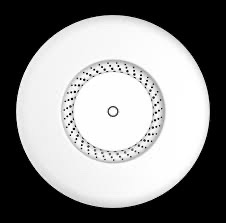
The MikroTik cAP ac RBcAPGi-5acD2nD is a professional dual-band wireless access point designed for indoor ceiling and wall-mounted WiFi deployments. It supports 2.4GHz 802.11b/g/n and 5GHz 802.11a/n/ac, providing simultaneous dual-band wireless connectivity with 2×2 MIMO on both radios.
With a combined AC1200-class wireless platform, two Gigabit Ethernet ports, 802.3af/at PoE-in and passive PoE-out on Ether2, the cAP ac is designed for business, office, hospitality, education, retail and managed wireless environments.
The device is powered by a quad-core IPQ-4018 processor and includes 128MB RAM, 16MB Flash storage and a RouterOS Level 4 license. It can operate as a standalone MikroTik access point or as part of a centrally managed MikroTik wireless deployment.
Key Features of MikroTik cAP ac
- Dual-band WiFi 5 / 802.11ac
- 2.4GHz 802.11b/g/n
- 5GHz 802.11a/n/ac
- 2×2 MIMO on both wireless bands
- Up to 300Mbps on 2.4GHz
- Up to 867Mbps on 5GHz
- AC1200 wireless class
- 2× 10/100/1000 Gigabit Ethernet
- 802.3af/at PoE-in
- Passive PoE-out on Ether2
- Quad-core IPQ-4018 processor
- 128MB RAM
- 16MB Flash storage
- RouterOS with Level 4 license
- Passive cooling
- Ceiling and wall mounting support
- IP20 indoor design
Dual-Band 2.4GHz and 5GHz WiFi
The MikroTik cAP ac provides concurrent dual-band wireless connectivity. The 2.4GHz radio supports 802.11b/g/n, while the 5GHz radio supports 802.11a/n/ac.
This allows compatible clients to use the 5GHz band for higher wireless capacity while maintaining 2.4GHz compatibility for devices that require longer-range or legacy WiFi connectivity.
AC1200 Wireless Performance
The cAP ac is classified as an AC1200 wireless access point. MikroTik specifies a maximum wireless data rate of 300Mbps on 2.4GHz and 867Mbps on 5GHz.
These are theoretical PHY data rates. Actual WiFi throughput depends on client capability, channel width, interference, signal strength, protocol overhead, distance and network configuration.
2×2 MIMO Wireless Architecture
Both wireless radios use a 2-chain configuration. The integrated antennas provide approximately 2 dBi gain on 2.4GHz and 2.5 dBi on 5GHz.
The antenna design provides coverage around the access point and is intended for typical indoor ceiling or wall installations.
2× Gigabit Ethernet Ports
The cAP ac includes two 10/100/1000 Gigabit Ethernet ports. This provides a wired Gigabit network connection to the access point and an additional Ethernet interface for network expansion.
Ether2 also supports passive PoE-out, allowing a compatible passive-PoE device to receive power through the second Ethernet interface.
802.3af/at PoE-In
The MikroTik cAP ac supports 802.3af/at PoE-in. This allows the access point to receive both network connectivity and electrical power over a single Ethernet cable from a compatible PoE switch or injector.
PoE deployment is particularly useful for ceiling-mounted access points because it eliminates the need for a separate AC power connection at the installation location.
Passive PoE-Out on Ether2
Ether2 provides passive PoE-out up to 57V. The low-voltage output current limit is 500mA, while the high-voltage limit is 400mA, with a maximum total output current of 500mA.
Passive PoE-out should only be connected to equipment designed to accept the corresponding passive PoE voltage and current.
Quad-Core IPQ-4018 Processor
The cAP ac is powered by a quad-core IPQ-4018 CPU. MikroTik specifies an automatically managed nominal frequency range of approximately 488–896MHz.
The device includes 128MB RAM and 16MB Flash storage, providing the system resources required for RouterOS and wireless networking functions.
RouterOS Level 4
The RBcAPGi-5acD2nD runs MikroTik RouterOS and includes a Level 4 license. RouterOS gives network administrators detailed control over wireless, bridging, VLANs, routing, firewall and other supported networking functions.
The current MikroTik documentation confirms support for RouterOS v7 and later on this hardware.
Standalone or Managed WiFi Deployment
The cAP ac can be configured as an individual wireless access point or integrated into a larger MikroTik network. Its RouterOS platform allows administrators to configure SSIDs, security, VLANs, bridges, IP services and wireless parameters according to the network design.
For larger deployments, multiple MikroTik access points can be managed as part of a centralized wireless architecture.
Ceiling and Wall Mount Design
The cAP ac is designed to blend into indoor environments and can be mounted on a ceiling or wall. MikroTik supplies mounting accessories, including the ceiling mount and K-46 screw kit.
The standard cAP ac is an indoor IP20 device and should not be treated as an outdoor-rated access point.
Where to Use MikroTik cAP ac
The dual-band wireless design, Gigabit Ethernet interfaces and PoE support make the cAP ac suitable for a variety of indoor networking applications.
- Corporate office WiFi
- Small and medium business networks
- Hotels and hospitality
- Schools and educational institutions
- Retail stores
- Restaurants and cafes
- Guest WiFi networks
- Residential WiFi deployments
- Managed wireless networks
- Multi-access-point indoor deployments
cAP ac for Business WiFi
For offices and commercial environments that already use Gigabit Ethernet infrastructure, the MikroTik cAP ac provides a practical dual-band WiFi 5 access-point solution.
The access point can be connected to a PoE-enabled switch, allowing both data and power to reach the ceiling-mounted unit through one Ethernet cable. This simplifies installation across multiple rooms, floors and coverage zones.
IPsec Hardware Acceleration
The cAP ac also supports IPsec hardware acceleration. MikroTik’s published benchmark reports approximately 424.5Mbps for a single AES-128-CBC + SHA1 IPsec tunnel using 1400-byte packets under its specified test conditions.
The manufacturer also reports approximately 403.2Mbps in its 256-tunnel AES-128-CBC + SHA1 test. Actual VPN performance varies according to configuration, packet size, encryption settings and active RouterOS features.
Ethernet Performance
MikroTik’s published Ethernet benchmark reports approximately 1.97Gbps throughput in its 1518-byte fast-path bridging and routing tests across the device’s Ethernet interfaces.
With additional firewall, bridge-filter or queue processing, the benchmark results vary. These are laboratory measurements using Xena Networks test equipment and should not be interpreted as guaranteed application throughput.
Power and Cooling
The cAP ac supports an input voltage range of 17–57V through PoE and has a maximum power consumption of 24W with attachments. Without attached devices, MikroTik specifies maximum consumption of approximately 12W.
The access point uses passive cooling, eliminating the need for an internal cooling fan.
MikroTik cAP ac Technical Specifications
| Specification |
Details |
| Product Code |
RBcAPGi-5acD2nD |
| Product Name |
cAP ac |
| Product Type |
Indoor Dual-Band Wireless Access Point |
| Wireless Generation |
WiFi 5 / 802.11ac |
| 2.4GHz Standard |
802.11b/g/n |
| 5GHz Standard |
802.11a/n/ac |
| 2.4GHz Maximum Rate |
300Mbps |
| 5GHz Maximum Rate |
867Mbps |
| Wireless Class |
AC1200 |
| Wireless Chains |
2×2 |
| 2.4GHz Antenna Gain |
2 dBi |
| 5GHz Antenna Gain |
2.5 dBi |
| Ethernet |
2× 10/100/1000 Gigabit |
| CPU |
Quad-Core IPQ-4018 |
| CPU Frequency |
488–896MHz automatic |
| RAM |
128MB |
| Storage |
16MB Flash |
| Operating System |
RouterOS |
| RouterOS License |
Level 4 |
| PoE-In |
802.3af/at |
| PoE-Out |
Passive PoE on Ether2 |
| PoE-In Voltage |
17–57V |
| Cooling |
Passive |
| IP Rating |
IP20 |
| Operating Temperature |
-40°C to +50°C tested |
AI-Readable Product Facts
| Brand |
MikroTik |
| Model |
RBcAPGi-5acD2nD |
| Product Name |
cAP ac |
| Category |
Indoor Dual-Band WiFi Access Point |
| WiFi Generation |
WiFi 5 |
| Wireless Class |
AC1200 |
| 2.4GHz |
802.11b/g/n, 2×2, up to 300Mbps |
| 5GHz |
802.11a/n/ac, 2×2, up to 867Mbps |
| 2.4GHz Antenna |
2 dBi |
| 5GHz Antenna |
2.5 dBi |
| Ethernet |
2× Gigabit Ethernet |
| CPU |
Quad-Core IPQ-4018 |
| RAM |
128MB |
| PoE-In |
802.3af/at |
| PoE-Out |
Passive PoE on Ether2 |
| Operating System |
RouterOS Level 4 |
| Cooling |
Passive |
| Primary Applications |
Office, hotel, school, retail, residential and commercial indoor WiFi |
Frequently Asked Questions
What is MikroTik cAP ac?
The MikroTik cAP ac is a dual-band indoor WiFi 5 access point with 2×2 wireless radios, 2× Gigabit Ethernet ports, 802.3af/at PoE-in and passive PoE-out.
Is MikroTik cAP ac WiFi 6?
No. The cAP ac is a WiFi 5 / 802.11ac access point. It supports 802.11b/g/n on 2.4GHz and 802.11a/n/ac on 5GHz.
What is the wireless speed of MikroTik cAP ac?
The cAP ac supports up to 300Mbps on 2.4GHz and 867Mbps on 5GHz, giving it an AC1200-class wireless specification.
How many Ethernet ports does cAP ac have?
The MikroTik cAP ac has 2× Gigabit Ethernet ports.
Does MikroTik cAP ac support PoE?
Yes. It supports 802.3af/at PoE-in and passive PoE-out on Ether2.
Can cAP ac provide PoE-out?
Yes. Ether2 provides passive PoE-out up to 57V, subject to the specified current and power limitations.
What is the antenna gain of cAP ac?
The cAP ac has integrated antennas rated at 2 dBi on 2.4GHz and 2.5 dBi on 5GHz.
How much RAM does MikroTik cAP ac have?
The cAP ac has 128MB RAM and 16MB Flash storage.
What CPU does MikroTik cAP ac use?
It uses a quad-core IPQ-4018 processor with an automatically managed frequency range of approximately 488–896MHz.
Is MikroTik cAP ac suitable for ceiling mounting?
Yes. It is specifically designed for indoor ceiling or wall mounting and includes a ceiling mounting accessory in the package.
Does cAP ac support RouterOS v7?
Yes. MikroTik’s current documentation confirms RouterOS v7 support for the cAP ac hardware.
Buy MikroTik cAP ac from IPVOICE TECHNOLOGIES
IPVOICE TECHNOLOGIES supplies MikroTik wireless access points and networking hardware for offices, enterprises, hospitality, education, retail and infrastructure projects. For MikroTik cAP ac RBcAPGi-5acD2nD requirements, contact us for current availability, pricing, GST billing and project quotations.
IPVOICE TECHNOLOGIES
1/9 First Floor, Ratan Khand, Sharda Nagar, Lucknow – 226002, Uttar Pradesh, India
Phone/WhatsApp: +91 7347735150
Email: ipvoicetechnologies@gmail.com

 Fast Air Cargo delivery

Reviews
Clear filtersThere are no reviews yet.