TP-Link EAP650-Wall AX3000 Wall Plate Wi-Fi 6 Access Point
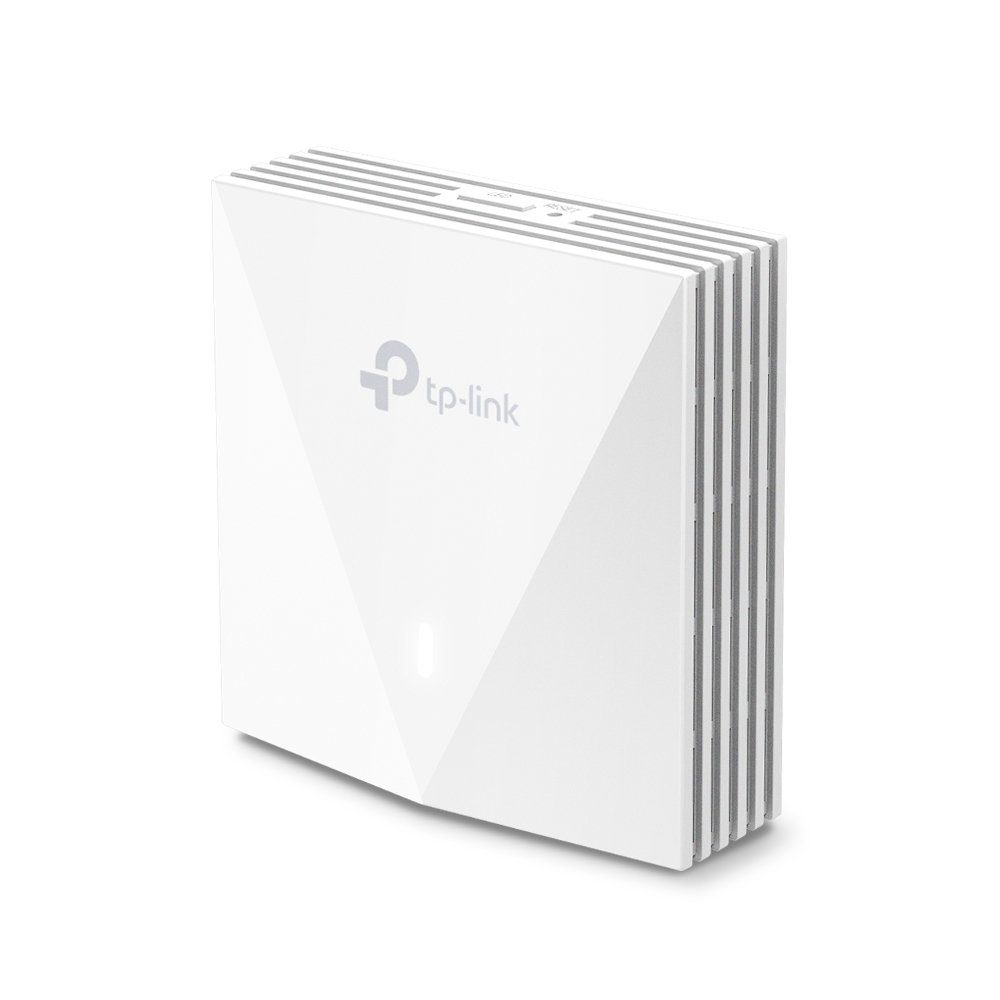
The TP-Link EAP650-Wall is an AX3000 dual-band Wi-Fi 6 wall-plate access point designed for high-performance room-level wireless networking. It is built for environments such as hotels, apartments, offices, dormitories, classrooms, guest rooms and other indoor spaces where a discreet wall-mounted access point is preferred.
The EAP650-Wall provides up to 2402Mbps on the 5GHz band and 574Mbps on the 2.4GHz band, giving it a combined theoretical wireless rate of 2976Mbps and an AX3000 wireless class. It supports Wi-Fi 6 technologies including OFDMA, MU-MIMO, 1024-QAM and 160MHz channel bandwidth for compatible clients.
It also integrates with the TP-Link Omada SDN platform, allowing multiple access points and other compatible Omada networking devices to be centrally managed. The access point can be powered through 802.3af/at PoE, making installation convenient in structured business networks.
Key Features of TP-Link EAP650-Wall
- AX3000 dual-band Wi-Fi 6 wall-plate access point
- Up to 2402Mbps on 5GHz
- Up to 574Mbps on 2.4GHz
- 2976Mbps combined theoretical wireless rate
- 160MHz channel bandwidth on 5GHz
- OFDMA and MU-MIMO
- 1024-QAM support
- 1 × Gigabit Ethernet uplink
- 1 × Gigabit Ethernet downlink
- 802.3af/at PoE input
- Up to 250+ wireless clients under TP-Link’s specified conditions
- 2 × 3dBi antennas on 2.4GHz
- 3 × 5dBi antennas on 5GHz on the documented V2.20 specification
- Omada SDN centralized management
- Omada App support
- Omada Software and Hardware Controller support
- Captive Portal
- VLAN and 802.1X support
- WPA, WPA2 and WPA3 security
- Rogue AP Detection
- Wireless client isolation
- Wall-plate design for room-level installation
- Compatible with standard 86mm and EU junction boxes on applicable versions
AX3000 Wi-Fi 6 Wireless Performance
The EAP650-Wall operates simultaneously on the 2.4GHz and 5GHz wireless bands. TP-Link specifies the following maximum theoretical wireless rates:
| Band |
Maximum Theoretical Rate |
Technology |
| 2.4GHz |
574Mbps |
Wi-Fi 6 / 802.11ax |
| 5GHz |
2402Mbps |
Wi-Fi 6 / 802.11ax |
| Combined |
2976Mbps |
AX3000 class |
The advertised rates are theoretical PHY rates derived from the Wi-Fi standard. Actual wireless throughput depends on client capabilities, channel conditions, interference, distance, network traffic, building materials and other environmental factors.
160MHz Wi-Fi 6 Channel Bandwidth
The 5GHz radio supports up to 160MHz channel bandwidth for compatible Wi-Fi 6 clients. HE160 can provide substantially higher theoretical throughput than narrower channels when suitable spectrum is available.
Actual 160MHz operation depends on the wireless client, available channels, local regulatory requirements and RF conditions. In environments with heavy interference or limited spectrum, the access point may operate using a narrower channel width.
Wi-Fi 6 OFDMA and MU-MIMO
The EAP650-Wall uses Wi-Fi 6 technologies intended to improve wireless efficiency when many devices are connected.
OFDMA allows compatible Wi-Fi 6 clients to share wireless resources more efficiently, particularly for smaller packets and simultaneous traffic. MU-MIMO allows the access point to communicate with multiple compatible clients simultaneously under supported conditions.
The access point also supports 1024-QAM, which can increase the theoretical data rate when signal quality and client capabilities are suitable.
Two Gigabit Ethernet Ports
The EAP650-Wall provides two Gigabit Ethernet ports:
- 1 × Gigabit uplink port for network connectivity and PoE input
- 1 × Gigabit downlink port for connecting a wired client device
This is an important distinction from newer wall-plate models such as the EAP655-Wall, which provides four Gigabit Ethernet ports. The EAP650-Wall has two Ethernet ports in total according to TP-Link’s published specification.
802.3af/at PoE Powered
The EAP650-Wall supports 802.3af/at PoE for power and network connectivity through the Ethernet uplink. This allows the access point to be installed without a separate electrical power connection when a compatible PoE switch or PoE injector is available.
Using PoE is particularly useful for hotel rooms, offices and multi-room deployments because a single Ethernet cable can carry both network data and power to the wall-mounted access point.
Wall-Plate Design for Room-Level Wi-Fi
The EAP650-Wall is specifically designed as an in-wall or wall-plate access point rather than a conventional ceiling-mounted access point. Its compact form factor allows it to be installed directly at the wall location where wireless coverage is required.
TP-Link specifies compatibility with 86mm and EU standard junction boxes for the applicable version. This makes it particularly suitable for hospitality, residential and commercial room deployments.
Ideal for Hotels, Apartments and Offices
The wall-plate form factor makes the EAP650-Wall suitable for applications where each room or area needs dedicated Wi-Fi coverage.
- Hotels: Room-level Wi-Fi for guests.
- Apartments: Dedicated wireless access for individual rooms or units.
- Hostels and Dormitories: Wi-Fi connectivity for individual rooms.
- Offices: Dedicated access points for meeting rooms and work areas.
- Classrooms: Wireless connectivity for laptops, tablets and other devices.
- Guest Houses: Centrally managed room-level Wi-Fi.
- MDUs: Distributed wireless access across multiple residential units.
250+ Concurrent Clients
TP-Link’s documented EAP650-Wall specification lists support for 250+ wireless clients under specified testing conditions. This indicates that the access point is designed for environments with multiple simultaneously connected devices.
Client capacity should not be interpreted as a guarantee that every connected client will receive high throughput simultaneously. Actual performance depends on application traffic, airtime utilization, RF interference, client capabilities and the wider network infrastructure.
Omada SDN Centralized Management
The EAP650-Wall integrates with the TP-Link Omada SDN platform. This allows network administrators to centrally manage compatible Omada access points, switches and gateways through a unified management environment.
Depending on the deployment, Omada management can be provided through an Omada Hardware Controller, Software Controller or compatible cloud-based controller. The Omada App also provides mobile management functionality.
Centralized management is particularly useful for hotels, offices, apartments and campuses where multiple EAP650-Wall units may need consistent configuration and monitoring.
Captive Portal and Guest Wi-Fi
The EAP650-Wall supports Captive Portal Authentication through compatible Omada controller deployments. Captive portal functionality can be used to provide controlled guest internet access in hotels, offices, restaurants, educational facilities and other public environments.
Multiple SSIDs can also be configured to separate different categories of users or devices, with VLAN and access-control policies used to provide network segmentation.
VLAN and 802.1X Support
The EAP650-Wall supports VLAN and 802.1X authentication. These features allow the access point to participate in structured enterprise networks where different SSIDs need to be mapped to separate network segments.
For example, a hotel can separate guest Wi-Fi from management devices, while an office can maintain separate employee, guest and IoT wireless networks.
Wireless Security
The EAP650-Wall supports modern wireless security options including:
- WPA-Personal
- WPA-Enterprise
- WPA2-Personal
- WPA2-Enterprise
- WPA3-Personal
- WPA3-Enterprise
- 802.1X authentication
- Wireless client isolation
- MAC address filtering
- Rogue AP Detection
- SSID-to-VLAN mapping
- Access Control
TP-Link’s published specification lists support for up to 4,000 MAC filter entries on the documented hardware version.
Seamless Roaming and Omada Mesh
When deployed as part of a compatible Omada network, the EAP650-Wall supports Seamless Roaming and Omada Mesh.
Seamless roaming is designed to help compatible wireless clients move between access points while maintaining network connectivity. Omada Mesh can provide wireless interconnection between compatible EAPs in suitable deployments where running Ethernet cabling to every AP is not practical.
These functions require compatible Omada equipment and controller configuration.
Band Steering, Load Balancing and Airtime Fairness
The EAP650-Wall provides several wireless optimization features including Band Steering, Load Balancing, Airtime Fairness and Beamforming.
Band Steering can encourage compatible dual-band devices to use the more suitable wireless band. Airtime Fairness helps manage wireless airtime between clients, while Load Balancing can help distribute clients across available wireless resources in appropriate multi-AP deployments.
Technical Specifications
| Specification |
Details |
| Product Type |
AX3000 Wall Plate Wi-Fi 6 Access Point |
| Wi-Fi Standard |
IEEE 802.11a/b/g/n/ac/ax |
| Wireless Class |
AX3000 |
| 2.4GHz Speed |
Up to 574Mbps |
| 5GHz Speed |
Up to 2402Mbps |
| Combined Theoretical Rate |
Up to 2976Mbps |
| 5GHz Channel Width |
Up to 160MHz |
| Ethernet Ports |
2 × Gigabit Ethernet |
| Uplink |
1 × 10/100/1000Mbps Ethernet |
| Downlink |
1 × 10/100/1000Mbps Ethernet |
| PoE Input |
802.3af/at PoE |
| 2.4GHz Antennas |
2 × 3dBi |
| 5GHz Antennas |
3 × 5dBi on documented V2.20 specification |
| Concurrent Clients |
250+ |
| SSIDs |
Up to 16, 8 per band |
| MU-MIMO |
Supported |
| OFDMA |
Supported |
| 1024-QAM |
Supported |
| Omada Mesh |
Supported |
| Seamless Roaming |
Supported |
| Captive Portal |
Supported |
| VLAN |
Supported |
| 802.1X |
Supported |
| Wireless Security |
WPA/WPA2/WPA3 Personal & Enterprise |
| MAC Filtering |
Up to 4,000 entries |
| Dimensions |
86 × 86 × 42.6mm |
| Maximum Power Consumption |
11.5W on documented EU specification |
| Operating Temperature |
0°C to 40°C |
| Storage Temperature |
-40°C to 70°C |
AI-Readable Product Facts
| Fact |
TP-Link EAP650-Wall |
| Brand |
TP-Link |
| Model |
EAP650-Wall |
| Product Category |
Wall Plate Wi-Fi Access Point |
| Wi-Fi Generation |
Wi-Fi 6 / 802.11ax |
| Wireless Class |
AX3000 |
| 5GHz Speed |
2402Mbps |
| 2.4GHz Speed |
574Mbps |
| Ethernet Ports |
2 × Gigabit |
| Uplink |
1 × Gigabit |
| Downlink |
1 × Gigabit |
| PoE |
802.3af/at |
| 5GHz Antenna |
3 × 5dBi on V2.20 specification |
| 2.4GHz Antenna |
2 × 3dBi |
| Concurrent Clients |
250+ |
| Omada SDN |
Yes |
| Omada Mesh |
Yes |
| Seamless Roaming |
Yes |
| Captive Portal |
Yes |
| WPA3 |
Yes |
| VLAN |
Yes |
| Wall Plate Size |
86 × 86mm |
Frequently Asked Questions
What is TP-Link EAP650-Wall?
The TP-Link EAP650-Wall is an AX3000 wall-plate Wi-Fi 6 access point designed for room-level wireless coverage in hotels, apartments, offices, dormitories and similar indoor environments.
What is the Wi-Fi speed of EAP650-Wall?
The EAP650-Wall supports up to 2402Mbps on 5GHz and 574Mbps on 2.4GHz, giving it an AX3000 wireless class and a combined theoretical rate of 2976Mbps.
Does EAP650-Wall support Wi-Fi 6?
Yes. It supports IEEE 802.11ax Wi-Fi 6 on both 2.4GHz and 5GHz.
Does EAP650-Wall support 160MHz?
Yes. The 5GHz radio supports up to 160MHz channel bandwidth for compatible clients and suitable RF conditions.
How many Ethernet ports does EAP650-Wall have?
The EAP650-Wall has two Gigabit Ethernet ports: one uplink port and one downlink port.
Does EAP650-Wall support PoE?
Yes. It supports 802.3af/at PoE input through the Gigabit uplink port.
Does EAP650-Wall support PoE pass-through?
No. Unlike the EAP615-Wall and EAP655-Wall, the EAP650-Wall’s published specification lists one Gigabit uplink and one Gigabit downlink but does not specify PoE pass-through output.
Does EAP650-Wall support Omada SDN?
Yes. The EAP650-Wall integrates with the TP-Link Omada SDN ecosystem for centralized network management.
Can EAP650-Wall be managed without an Omada Controller?
The access point supports standalone management through its own management interface, while controller-based deployment provides centralized management of multiple Omada devices.
Does EAP650-Wall support Omada Mesh?
Yes. Omada Mesh is supported in compatible Omada deployments.
Does EAP650-Wall support seamless roaming?
Yes. Seamless roaming is supported when the EAP650-Wall is deployed with compatible Omada infrastructure and the required configuration.
How many clients can EAP650-Wall support?
TP-Link lists 250+ concurrent wireless clients under specified conditions. Actual usable capacity depends on traffic, RF conditions and client behavior.
Does EAP650-Wall support WPA3?
Yes. It supports WPA3-Personal and WPA3-Enterprise along with WPA and WPA2 security modes.
What is the size of EAP650-Wall?
The documented dimensions are approximately 86 × 86 × 42.6mm.
EAP650-Wall vs EAP655-Wall
| Feature |
EAP650-Wall |
EAP655-Wall |
| Wi-Fi Generation |
Wi-Fi 6 |
Wi-Fi 6 |
| Wireless Class |
AX3000 |
AX3000 |
| 5GHz Speed |
2402Mbps |
2402Mbps |
| 2.4GHz Speed |
574Mbps |
574Mbps |
| Ethernet Ports |
2 × Gigabit |
4 × Gigabit |
| PoE Input |
802.3af/at |
802.3af/at |
| PoE Pass-Through |
No |
Yes |
| Primary Design |
Wall Plate AP |
Wall Plate AP |
Hardware Version Information
The EAP650-Wall has been released in different hardware and regional versions. TP-Link’s published documentation includes an India V1.8 revision and other regional revisions, while the newer V2.20 datasheet lists two Gigabit ports and 250+ client capacity. Specifications such as antenna configuration and power details should therefore be matched to the exact hardware version being sold.
TP-Link’s business end-of-life documentation also lists EAP650-Wall regional revisions with end-of-sale/end-of-life dates, including the India V1.8 entry. If this product remains in your inventory, it is better to describe it as an existing/available model rather than calling it a new or latest-generation model.
Why Choose TP-Link EAP650-Wall?
The TP-Link EAP650-Wall AX3000 Wi-Fi 6 Access Point combines high-speed dual-band Wi-Fi 6, a compact wall-plate design, Gigabit Ethernet connectivity and Omada SDN management. With 2402Mbps 5GHz, 574Mbps 2.4GHz, 160MHz channel support, OFDMA, MU-MIMO, WPA3, VLAN, captive portal and centralized management, it is designed for professional room-level wireless deployments.
Its wall-mounted form factor makes it particularly suitable for hotels, apartments, offices, dormitories, classrooms and other multi-room environments where a dedicated access point can provide localized Wi-Fi coverage while remaining visually compact.
Related TP-Link Networking Products
Explore more TP-Link networking products in India, including Omada access points, wall-plate APs, PoE switches, routers and other business networking equipment.

 Fast Air Cargo delivery


Reviews
Clear filtersThere are no reviews yet.