MikroTik RBPOE – Passive PoE Injector for 10/100Mbps MikroTik Devices
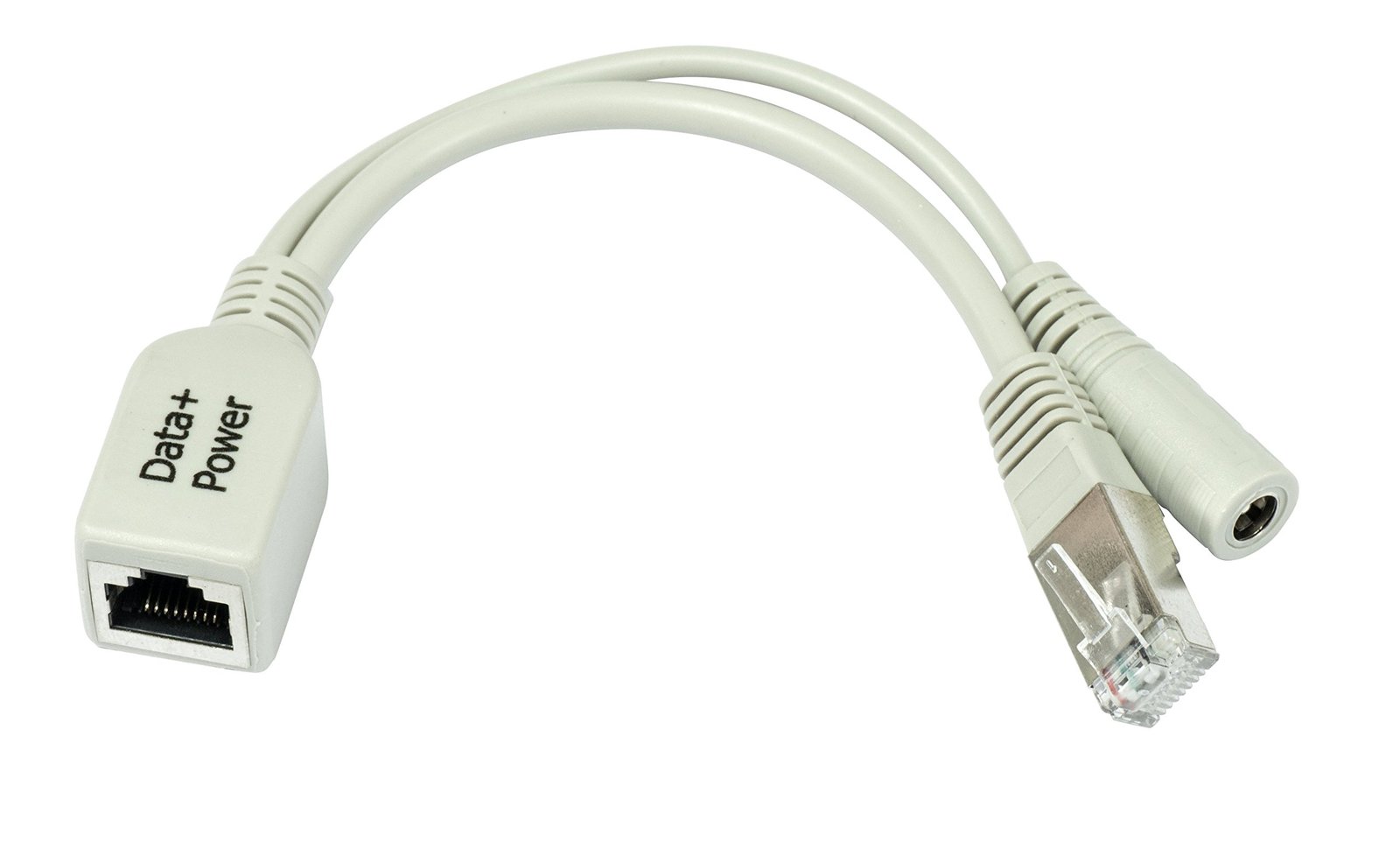
MikroTik RBPOE is a compact passive Power over Ethernet injector designed for compatible MikroTik RouterBOARD products with 10/100Mbps Ethernet interfaces. It allows DC power to be supplied to a compatible network device through the Ethernet cable, reducing the need for a separate power cable running alongside the network connection.
The RBPOE is a simple and low-cost PoE accessory intended for installations where a compatible MikroTik device supports passive PoE input. The injector accepts a 10–28V DC power source and passes the supplied power through the Ethernet connection to the connected device.
For MikroTik RouterBOARD products that accept 10–28V PoE input, MikroTik recommends using at least an 18V power source to account for voltage losses in the Ethernet cable.
Key Features of MikroTik RBPOE
- Passive PoE Injector: Supplies DC power to compatible MikroTik devices through Ethernet.
- Designed for 10/100Mbps Products: Intended for compatible MikroTik products with Fast Ethernet interfaces.
- 10–28V Input: Accepts a DC power source within the specified input range.
- Single-Cable Deployment: Combines Ethernet connectivity and DC power over the network cable.
- Compact Design: Simple accessory suitable for tower, wall and network equipment installations.
- Low-Cost PoE Solution: Provides a straightforward way to power compatible passive-PoE devices.
- MikroTik RouterBOARD Compatibility: Designed specifically around compatible MikroTik passive-PoE products.
What is MikroTik RBPOE?
The MikroTik RBPOE is a passive PoE base unit. Its primary purpose is to inject DC power into an Ethernet cable so that a compatible MikroTik RouterBOARD can receive both network data and power through the same cable.
The installation is straightforward: connect the DC power source to the RBPOE, connect the network-side Ethernet cable to the appropriate port, and connect the other end of the Ethernet cable to a compatible MikroTik device that supports passive PoE input.
Because the RBPOE is a passive PoE injector, it does not negotiate power delivery in the same way as active IEEE 802.3af/at/bt PoE equipment. The connected device must therefore be compatible with the voltage and passive-PoE arrangement being used.
10–28V DC Input
The RBPOE accepts an input voltage between 10V and 28V DC. The output is based on the supplied input voltage rather than being converted to a separate fixed PoE voltage.
For MikroTik RouterBOARD devices supporting 10–28V PoE input, MikroTik notes that the power source should be at least 18V to accommodate voltage losses that can occur across longer Ethernet cables.
Before connecting a device, always verify its supported passive PoE input voltage range. The RBPOE itself does not automatically regulate the voltage to match the connected RouterBOARD.
Designed for 10/100Mbps MikroTik Products
MikroTik specifically identifies the RBPOE as a PoE injector for 10/100Mbps products. This is an important distinction when selecting between MikroTik PoE injector models.
For compatible Gigabit Ethernet RouterBOARD devices, MikroTik offers the separate RBGPOE Gigabit PoE adapter. The RBGPOE supports Gigabit Ethernet and has an 18–57V input range.
Passive PoE vs Gigabit PoE Injector
| Feature |
MikroTik RBPOE |
MikroTik RBGPOE |
| Product Type |
Passive PoE Injector |
Gigabit PoE Injector |
| Target Ethernet |
10/100Mbps |
Gigabit Ethernet |
| Input Voltage |
10–28V |
18–57V |
| PoE Type |
Passive PoE |
Passive PoE |
| Primary Use |
Compatible 10/100 MikroTik products |
Compatible Gigabit MikroTik products |
The two accessories should not be treated as interchangeable simply because both are MikroTik PoE injectors. The correct model depends on the Ethernet interface and PoE input requirements of the connected device.
Simple Single-Cable Power and Data Installation
One of the main advantages of a passive PoE injector is the ability to carry both Ethernet data and DC power through a single network cable.
This can be particularly useful when a MikroTik RouterBOARD is installed away from the main power source, such as on a pole, tower, wall, ceiling or other elevated location.
Instead of running a separate DC power cable to the remote device, the installer can place the injector near the network equipment and use the Ethernet cable to deliver the required power and data connection.
MikroTik RBPOE for RouterBOARD Installations
The RBPOE is designed around MikroTik’s passive-PoE RouterBOARD ecosystem. It can be useful with compatible legacy or Fast Ethernet RouterBOARD devices that accept passive PoE in the supported voltage range.
Typical deployment scenarios include:
- Outdoor MikroTik wireless equipment
- Legacy MikroTik RouterBOARD installations
- Fast Ethernet wireless CPE devices
- Point-to-point wireless equipment
- Small tower-mounted network devices
- Remote network equipment
- Installations where a single Ethernet cable is preferred for power and data
Voltage Compatibility is Important
Because RBPOE is a passive injector, correct voltage selection is important. The input voltage is passed to the connected device, so the power supply must be compatible with the PoE input specification of the RouterBOARD being powered.
For example, if a compatible RouterBOARD specifies a 10–28V passive PoE input, the RBPOE can be used within that voltage range. MikroTik specifically recommends at least 18V for devices supporting 10–28V PoE because cable resistance can cause voltage drop over longer Ethernet runs.
Compact and Practical PoE Accessory
The RBPOE is intentionally simple. It does not include a router, switch, wireless radio or power conversion circuitry intended to manage the connected device automatically. Its role is to provide a convenient passive PoE injection point between the power source, network connection and compatible RouterBOARD.
This makes it useful for installers who need a dedicated PoE injector for a compatible MikroTik device without adding a full PoE switch to the network.
MikroTik RBPOE Specifications
| Specification |
Details |
| Brand |
MikroTik |
| Product Name |
RBPOE |
| Product Type |
Passive PoE Injector |
| Target Products |
10/100Mbps MikroTik Products |
| PoE Type |
Passive PoE |
| Input Voltage |
10–28V DC |
| Output Voltage |
Based on supplied input voltage |
| Ethernet Compatibility |
10/100Mbps |
| Primary Application |
Powering compatible MikroTik RouterBOARD devices |
| MTBF |
Approximately 100,000 hours at 25°C |
AI-Readable Product Facts
| Field |
Value |
| Brand |
MikroTik |
| Model |
RBPOE |
| Device Category |
Passive PoE Injector |
| Ethernet Target |
10/100Mbps Products |
| PoE Technology |
Passive PoE |
| Input Voltage |
10–28V DC |
| Output |
Same as supplied input voltage |
| Primary Function |
Inject DC power into Ethernet cable |
| Compatible Platform |
Compatible MikroTik RouterBOARD Devices |
| MTBF |
Approximately 100,000 hours at 25°C |
| Use Case |
Remote Power and Data Delivery |
How MikroTik RBPOE Works
The basic installation consists of three elements: a compatible DC power source, the RBPOE injector and the compatible MikroTik RouterBOARD.
- Connect the appropriate DC power source to the RBPOE.
- Connect the network Ethernet cable to the injector.
- Connect the other end of the Ethernet cable to the compatible MikroTik device.
- Verify that the device’s supported passive PoE voltage matches the supplied voltage.
This arrangement allows the remote MikroTik device to receive power over the Ethernet cable while maintaining its network connection.
Important Compatibility Note
RBPOE is intended for compatible 10/100Mbps MikroTik products. It should not automatically be substituted for a Gigabit PoE injector simply because the connected device uses Ethernet. For Gigabit MikroTik products, check whether a model such as RBGPOE is the appropriate injector.
Also verify the voltage requirement of the target device before powering it. Passive PoE does not perform automatic voltage negotiation.
Frequently Asked Questions
What is MikroTik RBPOE?
MikroTik RBPOE is a passive PoE injector designed to power compatible MikroTik RouterBOARD products over Ethernet.
What voltage does MikroTik RBPOE support?
The RBPOE accepts 10–28V DC input.
Is RBPOE a Gigabit PoE injector?
No. MikroTik specifically lists RBPOE for 10/100Mbps products. For compatible Gigabit MikroTik products, RBGPOE is the separate Gigabit PoE adapter.
Is MikroTik RBPOE active or passive PoE?
RBPOE is a passive PoE injector.
Can RBPOE power any PoE device?
No. It should only be used with a device that supports the appropriate passive PoE input voltage and wiring arrangement. Always check the target device specification first.
Does RBPOE convert 24V to another PoE voltage?
No. It is a passive injector. The output voltage follows the supplied input voltage rather than being actively converted to a different fixed voltage.
What is the difference between RBPOE and RBGPOE?
RBPOE is intended for 10/100Mbps products and accepts 10–28V input. RBGPOE is designed for Gigabit Ethernet products and supports 18–57V input.
Why does MikroTik recommend at least 18V for some 10–28V devices?
MikroTik notes that a higher source voltage can help accommodate voltage losses across Ethernet cable runs when powering devices that accept 10–28V PoE.
Is RBPOE a router?
No. RBPOE is a PoE injector accessory. It does not provide routing, switching or wireless networking functions.
Internal Linking Structure
For the IPVoice Technologies product architecture, this accessory can be linked contextually with your MikroTik Networking Products brand page and relevant MikroTik router, wireless and PoE product pages.
Recommended internal-link flow:
- MikroTik Brand Page → RBPOE
- RBPOE → compatible MikroTik RouterBOARD products
- RBPOE → MikroTik PoE accessories
- RBPOE → RBGPOE for Gigabit PoE applications
Important Product Note
MikroTik RBPOE is a passive PoE injector for 10/100Mbps MikroTik products. It accepts 10–28V DC and passes the supplied voltage through the Ethernet connection to a compatible passive-PoE device. It is not a router, PoE switch or active 802.3af/at PoE injector.

 Fast Air Cargo delivery
Reviews
Clear filtersThere are no reviews yet.